15 types of backlinks, and which one each site actually gives out
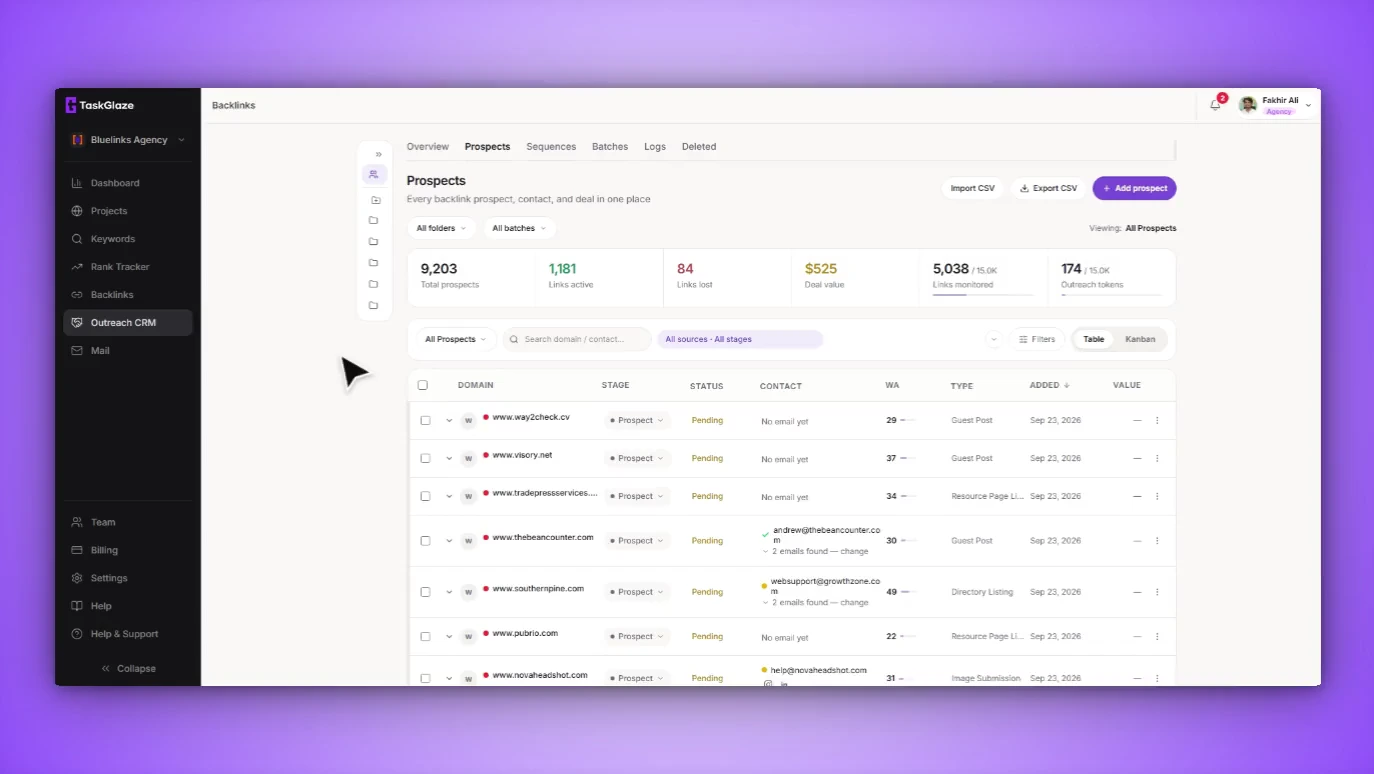
Every prospect is classified by the kind of link it hands out — guest post, niche edit, resource page, HARO and eleven more — so you pitch the ask that site already says yes to.
- named link types, plus an honest "Other"
- 15
- and whether rules or the model decided
- Confidence %
- also judges niche fit and reads guidelines
- Same pass
Where Backlink Types fits
Each step hands its output straight to the next — no exports, no second tool.
Most outreach fails at the ask, not the prospecting. The domain is fine and the niche is fine, but the email requests something that site has never given anyone: a guest post pitch to a resource-page curator, a free-collaboration email to a blog that only sells sponsored posts.
Each type of backlink is a different transaction. A guest post means you write the article. A niche edit means asking for one line in an article that already exists. A resource page link means submitting a URL to a curated list. A HARO placement means answering a journalist fast and well. TaskGlaze reads each prospect's site for the signals a link type leaves behind and tags the record with the method it actually operates, before you write anything.
Backlink Types, step by step
It reads the pages that give the answer away
The homepage plus category-signal pages — write-for-us, contribute, advertise, submit a press release, the forum index — inside a small page budget, so a classification is quick rather than a full crawl.
It scores signals, not just words
Weighted phrases, plus structural markers: forum software pushes toward forum post, comment plugins toward blog comment, a homepage with 25 or more outbound domains toward directory. The best score wins, and confidence reflects how far it finished ahead.
Thin signals go to a language model
Below a confidence threshold, the same scraped text is handed to a model for the final call — no second crawl. Whether the rules or the model decided is stored on the record.
The verdict rides with the prospect
Method, confidence and source are saved to the CRM record. Filter your pipeline by link type, work every guest-post prospect in one sitting, and use the matching template from the built-in library.
What's included in Backlink Types
Fifteen named types
Guest Post, Article Submission, Press Release, Directory Listing, Niche Edit, Link Insertion, Resource Page, Broken Link Building, HARO / Journalist, Forum Post, Blog Comment, Social Bookmark, Sponsored Post, Infographic Submission and Image Submission.
An honest fallback
When nothing scores, the domain is tagged Other instead of a confident wrong guess — a wrong label costs you a send.
Confidence and source on every tag
Each detected method shows a confidence percentage and whether the rules or the model decided. No source means a person typed it.
Niche relevance in the same pass
The same scrape judges whether the domain fits your project's niche and records the niche it detected.
Contributor guidelines extracted
Word counts, link policy and what they won't accept are pulled onto the record when a site publishes them.
Templates that match the ask
The template library is organised by method, so a guest-post pitch, a niche-edit ask and a broken-link replacement are three different emails.
What it doesn't do
Worth knowing before you sign up.
- Broken link building and niche edits are rarely advertised, so those land on the model step or "Other" more often than the rest.
- One primary method is stored per domain — the one the site pushes hardest. You can change it by hand at any time.
- It classifies the prospect's own site, not how a competitor got a link there.
Backlink Types: common questions
Straight answers. If yours isn't here, ask us and the founder will reply.
They cluster into six groups. Editorial placements you write — guest posts, article submissions, press releases. Edits to existing pages — niche edits, link insertions, broken link replacements. Submissions to a list — resource pages, directories, social bookmarks, infographic and image submissions. Earned mentions — HARO and journalist outreach. Paid placements — sponsored posts. And user-generated links — forum posts and blog comments.
Editorial placements and page edits do most of the work, because the link sits inside real content. Resource pages and HARO are the best effort-to-result trades when they fit your niche. Directories are worth it only when real people use them. Blog comments and social bookmarks are close to worthless for ranking. Sponsored posts can be legitimate but are paid links and should be marked as such.
Strongest where sites advertise themselves, which is most of the time — a domain with a write-for-us page classifies as a guest post at full confidence. A domain with no link-solicitation signals comes back as Other rather than a guess, and anything the rules are unsure about goes to the model before it's saved.
Plenty do. The record stores one primary method — the one the site pushes hardest — and you can change it by hand. The stored source tells you whether the current value came from the detector or a person.
Half a token from your plan's finder-token pool, and only when it lands on a genuinely new category. Landing on Other costs nothing, re-running on a classified prospect costs nothing, and the niche and guidelines from the same pass aren't charged separately.
Works with
- Outreach CRMSend the domains worth chasing into a pipeline built for link deals. TaskGlaze finds the contact address and checks it's deliverable before you write a word.
- Email OutreachConnect your mailbox and send from your real domain. Write each email with AI or a template, run sequences inside a daily cap, and every follow-up stops the moment someone replies.
- Backlink AnalysisFilter any domain's backlinks by authority, spam score and dofollow before you fetch, read them by referring domain, and see which sites link to your competitors but not to you.
Choosing between tools? Compare TaskGlaze with Pitchbox, Respona and BuzzStream or see every feature.